Unidad documental simple 062 - Pied harrier (Circus melanoleucos)

Open original Objeto digital

Área de título y declaración de responsabilidad

Título apropiado

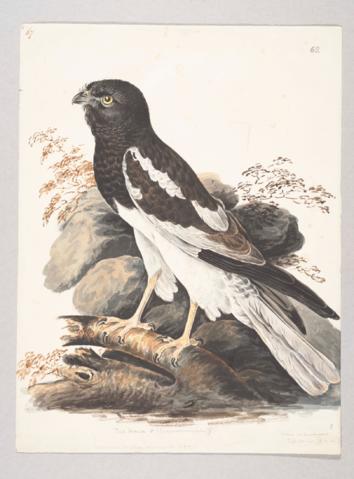
Pied harrier (Circus melanoleucos)

Tipo general de material

    Título paralelo

    Circus melanoleucos

    Otra información de título

    Título declaración de responsabilidad

    Título notas

    • Fuente del título: Title from 2007 identification of species.

    Nivel de descripción

    Unidad documental simple

    Institución archivística

    Código de referencia

    CA RBD MSG BW003-1-062

    Área de edición

    Declaración de edición

    Declaración de responsabilidad de edición

    Área de detalles específicos de la clase de material

    Mención de la escala (cartográfica)

    Mención de proyección (cartográfica)

    Mención de coordenadas (cartográfica)

    Mención de la escala (arquitectónica)

    Jurisdicción de emisión y denominación (filatélico)

    Área de fechas de creación

    Fecha(s)

    • [between 1801 and 1807?] (Creación)
      Creador
      Gwillim, Elizabeth, 1763-1807
      Lugar
      Madras (India)

    Área de descripción física

    Descripción física

    1 painting : watercolour [gouache] on paper ; 48.4 x 36.8 cm

    Área de series editoriales

    Título apropiado de las series del editor

    Títulos paralelos de serie editorial

    Otra información de título de las series editoriales

    Declaración de responsabilidad relativa a las series editoriales

    Numeración dentro de la serie editorial

    Nota en las series editoriales

    Área de descripción del archivo

    Nombre del productor

    (1763-1807)

    Historia biográfica

    Hereford-born Lady Elizabeth Gwillim (née Symonds) was an artist whose watercolors of Indian birds preceded John James Audubon’s bird paintings by about twenty years and are equally detailed and natural. Married in 1784 to lawyer Henry Gwillim, who was knighted in 1801, she accompanied her husband to Madras, India (modern-day Chennai) that same year, together with her younger sister, Mary Symonds. Following the defeat of Tipu Sultan in 1799, which secured South India for the ‘Company Raj’, Henry took the position of Puisne Judge in the Madras High Court. Elizabeth and Mary were prolific letter writers and their correspondence with family and friends in England (now in the British Library MSS Eur C240) includes descriptions of Indian culture and British life in India. During her six years in India, Elizabeth painted some 200 works, many life-sized. As well as birds, she also painted botanical subjects. Elizabeth Gwillim’s drawings of birds have been compared to those of her near contemporary John James Audubon (1). Her botanical drawings were also praised in Curtis’ Botanical Magazine (Sims 1804), which noted the ‘unusual elegance and accuracy’ of her work. Elizabeth Gwillim studied botany with the eminent Madras botanist Dr Johann Rottler (1749-1836), who named a magnolia after her, Gwillimia. She used her garden as an experimental farm, testing delicate northern plants like parsley, mint, thyme and strawberries (the quintessential English fruit) in the damp heat of Madras, and collecting seeds of the local flora for commercial nurseries in Fulham and Brompton. She was hailed as ‘the patroness of the science in that Presidency’ (Sims, Botanical Magazine, 1807), an acknowledgement of her role in an enterprise whose study has to date focused on male botanists like Roxburgh and Heyne. Gwillim died in India at the age of 44 of unknown causes.

    Historial de custodia

    Alcance y contenido

    Painting of a Harrier with black head and neck, piebald back and wings, and white legs and tail feathers. Perched on a tree with rocks and some foliage in the background. Inscription pencilled at bottom centre of painting reads, "Pied Harrier male symbol (Circus melanocephalus)" and "Circus melanoleucus (53), and in bottom right, "Circus melanoleucus, Pied Harrier [K.S. 46]" with a male symbol.

    Área de notas

    Condiciones físicas

    Slight staining in right upper half of painting.

    Origen del ingreso

    Purchased in London in 1924 by Casey A. Wood as part of a collection of watercolours in a portfolio labelled "E.C.K. 1800", and donated to the Blacker-Wood Library of Zoology and Ornithology.

    Arreglo

    Idioma del material

      Escritura del material

        Ubicación de los originales

        Disponibilidad de otros formatos

        Restricciones de acceso

        Condiciones de uso, reproducción, y publicación

        Instrumentos de descripción

        instrumento de descripción generado

        Materiales asociados

        Materiales relacionados

        Acumulaciones

        Nota general

        Species identified in 1920s as Pied harrier (Circus melanoleucus).;

        Nota general

        Inscriptions read: "67" top left, "62" top right. On back of painting: "No 107 Falco melanoleucos."

        Identificador/es alternativo(os)

        Número estándar

        Número estándar

        Puntos de acceso

        Puntos de acceso por materia

        Puntos de acceso por lugar

        Puntos de acceso por autoridad

        Tipo de puntos de acceso

        Área de control

        Identificador de registro de descripción

        Identificador de la institución

        Reglas o convenciones

        Estado de elaboración

        Nivel de detalle

        Fechas de creación, revisión o eliminación

        Idioma de descripción

          Escritura de la descripción

            Fuentes

            Objeto digital (URI externo), área de permisos

            Objeto digital (Referencia), área de permisos

            Objeto digital (Miniatura), área de permisos

            Área de Ingreso