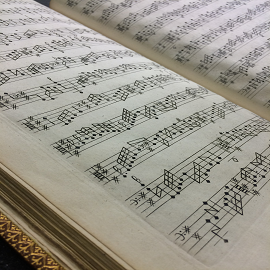
Item 943 - Frou-Frou

Title and statement of responsibility area

Title proper

Frou-Frou

General material designation

    Parallel title

    Other title information

    Vocal line only

    Title statements of responsibility

    Title notes

    Level of description

    Item

    Reference code

    CA MDML 015-2-943

    Edition area

    Edition statement

    Edition statement of responsibility

    Class of material specific details area

    Statement of scale (cartographic)

    Statement of projection (cartographic)

    Statement of coordinates (cartographic)

    Statement of scale (architectural)

    Issuing jurisdiction and denomination (philatelic)

    Dates of creation area

    Date(s)

    Physical description area

    Physical description

    Publisher's series area

    Title proper of publisher's series

    Parallel titles of publisher's series

    Other title information of publisher's series

    Statement of responsibility relating to publisher's series

    Numbering within publisher's series

    Note on publisher's series

    Archival description area

    Name of creator

    (1843-1933)

    Biographical history

    French composer Henri Chatau, born in Paris, is famed for his song “Frou-frou.” The music was originally composed for piano in 1890, then put to words by Lucien Delormel as “La fête du Souffleur.” At a time when the Viennese Waltz was popular, Hector Monreal and Henri Blondeau provided new lyrics, and it was a great success when first sung as “Frou-frou” in Paris by Juliette Méaly at the Théâtre des Variétés in 1897. Since then it has been sung by many artists: the Bibliothèque National de France has 107 entries for various versions, the latest recorded in 2017. It has been used in the soundtracks of nine films and TV series. Chatau wrote over 400 works during the late 19th and early 20th century, including “Le Brebis Perdue,” Les Trois Fauvettes,” Les Crêpes,” and “Les 28 Jours d’un Pinson.”

    Custodial history

    Scope and content

    Notes area

    Physical condition

    Immediate source of acquisition

    Arrangement

    Language of material

      Script of material

        Location of originals

        Availability of other formats

        Restrictions on access

        Terms governing use, reproduction, and publication

        Finding aids

        Associated materials

        Related materials

        Accruals

        Alternative identifier(s)

        Accession no.

        D943

        Standard number

        Standard number

        Access points

        Subject access points

        Place access points

        Name access points

        Genre access points

        Control area

        Description record identifier

        Institution identifier

        Rules or conventions

        Status

        Level of detail

        Dates of creation, revision and deletion

        Language of description

          Script of description

            Sources

            Accession area