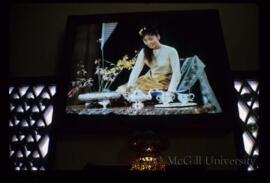
Interior view photograph. Photograph of a model infront of fine Burmese dinner ware.
McGill Libraries
McLennan Library Building3459 rue McTavish
Montreal, Quebec
H3A 0C9
Interior view photograph. Photograph of a model infront of fine Burmese dinner ware.
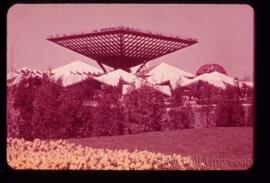
Exterior view photograph. Canada Pavilion (lot C-406) roof scape towered by an inverted pyramid structure (the "Katimavik"). The Canadian Pavilion was the largest complex at Expo. Dominated by an inverted pyramidal structure named the Katimavik (Eskimo word for "gathering place"), designers paid particular attention to the use of Canadian materials. The Katimavik boasted some of the most beautiful views of Expo as it was spanned on each of its 192 foot long sides by a promenade. Underneath the Katimavik was a revolving theatre containing five separate cinemas. At the centre of the theatre was a large stairway that brought visitors up to an outdoor terrace at the base of the Katimavik. On three sides of the Katimavik were 90,00 sq. ft exhibition areas and 14 pyramidal roofs. Themes were "The Land of Canada", "The People of Canada", The Growth of Canada", "The Challenges to Canadians" and "Canada and the World". On the fourth side stood the People Tree, a 66' high sculpture clad in hundreds of color photographs depicting Canadians in everyday life. From afar, these photographs were meant to resemble orange, yellow and red maple leaves! Other major elements were the Arts Centre, which included a gallery, library, theatre and two restaurants and a Children's Creative Center for youth ages 6 to 11. Nine hip-roofed buildings with a giant inverted pyramid and large circular tree. Structural steel and B.C. Fir Laminated wood. (S: 9 structures of varying size over 11.5 acres. --- A: 270,000 sq. ft. (building spaces) --- H: 100' (Katimavik))

Exterior view photograph. Candid photo of visitors on Ile Notre Dame. Venezuela Pavilion and Africa Place in background (lot C-460, C-462, C-463).
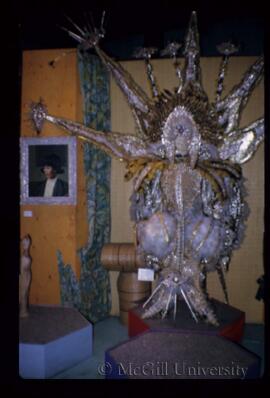
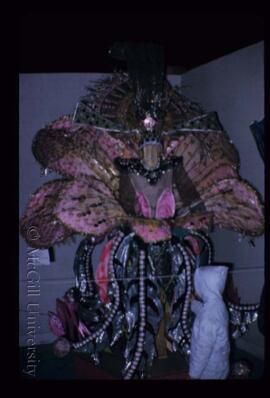
Interior view photograph. Costume handmade for Trinidad and Tobago's annual carnival.
Photograph of central ramp acting as the entrance to the second floor of the Australian Pavilion.
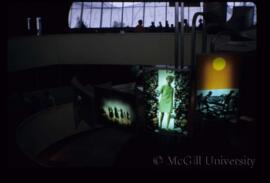
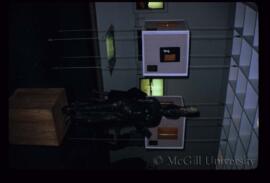
Interior view photograph. Statue and art display inside Ceylon Pavilion.
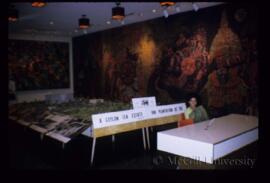
Interior view photograph. Model of a Ceylon tea estate. Ceylon is known for its skillful production of black or fully oxidized tea.
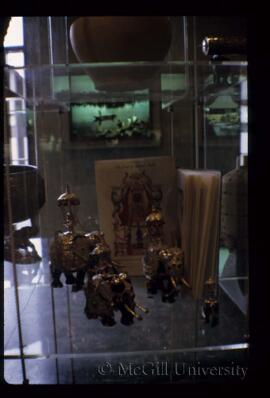
Interior view photograph. Elephant figurines in front of the celebrated book, "The God of Adam's Peak" (1957) written by Professor Senerath Paranavithana, a renowned archaeologist, historian, writer and scholar.
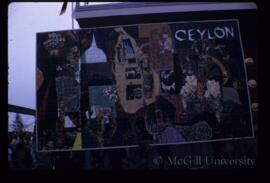
Exterior view photograph. Ceylon Pavilon (lot C-453) exterior mural. The Ceylon Pavilion drew reference to the country's famous audience hall in the hill capital of Kandy. The pavilion featured two stories of exhibits showcasing Ceylon's arts, industry, culture and government. On the lower level was a restaurant serving Ceylon tea. Rectangular volumes with double planed hip roof. Stuctural steel with wood. Finished with teak panels and precast concrete slabs. (S: 55' x 82'. --- A: 4,510 sq. ft. --- H: 45')